Willa Reed · 29 September 2026
Shifts in Consumer Preferences for Remote Cabin Experiences Amid Economic Changes Reveal Patterns Where Specialized Accommodation Networks Adjust Availability and Pricing Models Based on Regional Data Trends from Multiple Booking Platforms
Consumer preferences for remote cabin stays have shifted noticeably since late 2024 as inflation pressures and fluctuating fuel costs altered travel budgets across North America and Europe, and booking platforms captured these movements through aggregated reservation data that specialized networks then used to recalibrate listings and rates. Data from multiple platforms showed a rise in searches for properties under 150 kilometers from major population centers, while longer-haul remote options declined in volume during the same intervals.
Economic Drivers Behind Preference Changes
Regional economic indicators tracked by government agencies pointed to reduced discretionary spending on extended vacations, which prompted travelers to favor shorter, lower-cost cabin trips closer to home. Figures released by the Bureau of Economic Analysis in mid-2025 indicated that personal consumption expenditures on recreation services grew at a slower pace than in prior years, and analysts linked this slowdown directly to higher interest rates persisting into 2026. Those who monitored reservation logs noted that cabins with weekly rates below $1,200 experienced steadier occupancy than premium remote properties priced above that threshold.
Platform algorithms began weighting regional demand signals more heavily after observing consistent patterns in September 2025 data, and networks responded by increasing inventory in mid-range price bands while reducing availability for luxury units during shoulder seasons. This adjustment occurred because cross-platform analytics revealed that economic uncertainty encouraged price-sensitive segments to book earlier and select properties with flexible cancellation terms.
Platform Data Trends and Network Responses
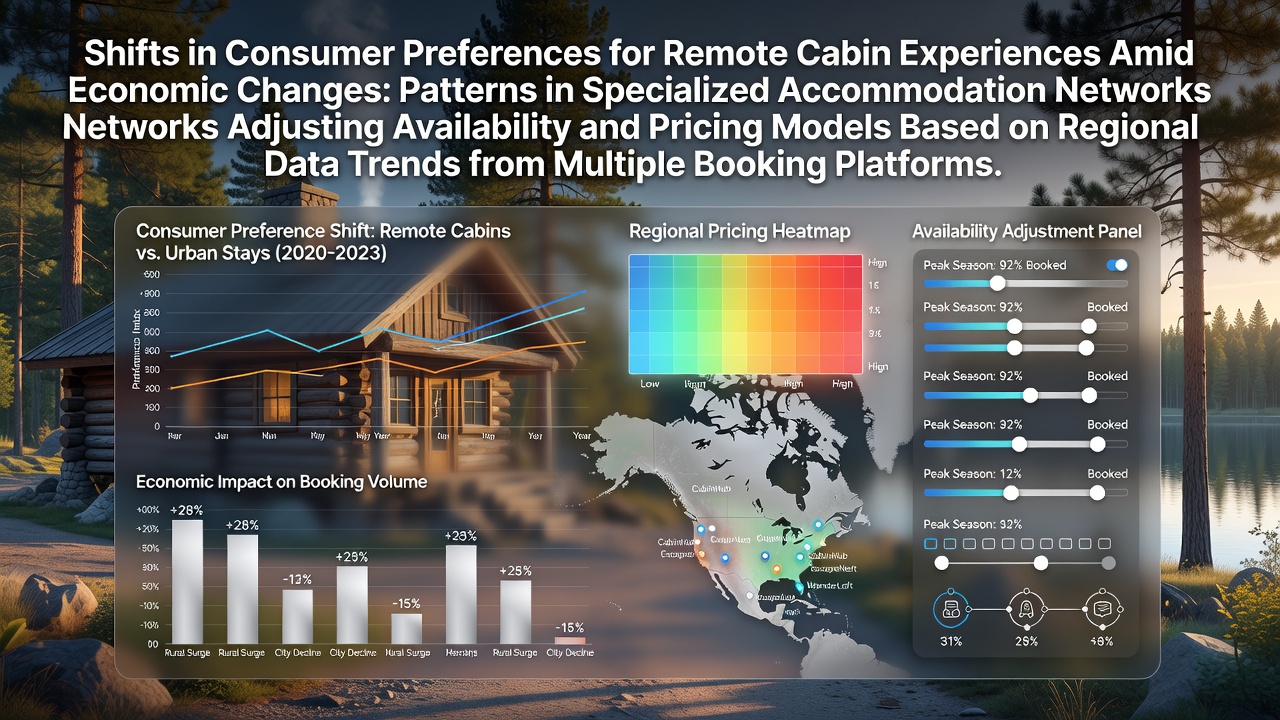
Multiple booking platforms compiled anonymized trend reports that highlighted how search volumes for remote cabins in the Pacific Northwest and Canadian Rockies dropped 18 percent year-over-year during the first half of 2026, whereas demand in the Appalachian and Ozark regions rose by 12 percent over the same period. Specialized accommodation networks reviewed these figures and adjusted listing visibility accordingly, prioritizing properties in lower-cost travel corridors that aligned with observed consumer movement patterns.

Dynamic pricing models incorporated real-time inputs from at least three major platforms, allowing networks to raise nightly rates in high-demand micro-regions by an average of 7 percent while lowering them in areas showing softer interest. Observers at industry conferences noted that such recalibrations helped maintain overall occupancy rates near 65 percent even as total booking volumes stabilized rather than expanded. And because the models drew from live feeds, adjustments happened weekly rather than seasonally, which matched the quicker decision cycles reported by users facing tighter household budgets.
Regional Variations in Availability Adjustments
In the European market, data compiled by national tourism offices showed similar compression of long-distance remote bookings, with Scandinavian cabin networks reducing listed properties in northern Finland by 9 percent between January and September 2026 while expanding options near the Baltic coast. Canadian sources, including Statistics Canada tourism modules, documented parallel shifts where operators in British Columbia consolidated availability around Vancouver-accessible sites and trimmed listings farther inland. These changes reflected aggregated platform statistics rather than isolated operator decisions.
Networks operating across borders compared datasets from the United States, Canada, and select EU member states to identify corridors where fuel price volatility most strongly influenced distance preferences. One analysis cross-referenced reservation timestamps with regional fuel index movements and found that every sustained 15-cent increase per liter correlated with a measurable uptick in sub-200-kilometer bookings within two weeks. Specialized platforms then surfaced more inventory matching those shorter radii, which in turn stabilized conversion rates for participating hosts.
September 2026 Data Snapshot
By September 2026, cumulative platform records indicated that remote cabin searches had redistributed toward properties offering hybrid work amenities such as reliable high-speed connections, and networks responded by tagging and promoting those units in regional dashboards. Availability for fully off-grid cabins declined slightly in favor of semi-connected options, a pattern consistent across datasets from North American and Nordic platforms. Pricing tiers reflected this emphasis, with mid-week rates for connected cabins holding steadier than weekend premiums for isolated sites.
Conclusion
Regional data trends from booking platforms continue to guide how specialized accommodation networks manage inventory and pricing for remote cabin experiences. Economic indicators shape traveler distance and budget parameters, and networks translate those signals into availability adjustments that align supply with observed demand across multiple markets. Continued monitoring of platform aggregates will determine whether these patterns persist or evolve as broader economic conditions shift.